/10
Playtime
Steam reviewers played Starward for 189h on average (486 reviews): 205h positive, 112h negative.
AI Insights
Pros
- Completely free to play
- Runs natively on Linux
- Fun Gundam EXVS-style arena combat
- Now supports English, Japanese and Korean
- Asia server gives playable latency
- No need to gacha for pilots
Cons
- Gacha is required to unlock movesets
- Duplicate units needed for full kit
- Pay-to-win against better equipped players
- Unplayable latency outside Asia
- Clunky mobile port, awkward keyboard controls
- Poorly designed UI
- No account progress transfer between platforms
- Small starting roster of characters
Target playerbase
- Gundam EXVS / Gundam VS fans
- Anime mech girl fans
- 2v2 arena fighting game players
- Free-to-play gacha players
- Players located in Asia for good ping
Recommendations






About Starward
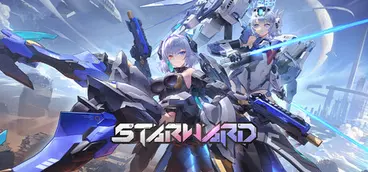
Starward is a 3D fighting game that integrates mecha girls and classic GVG combat gameplay, with 1V1 and 2V2 mode as the core gameplay.
Starward scores 5/10 on SteamScore (Mixed), calculated from 4,181 Steam user reviews.
FAQ
Frequently asked questions about Starward
When was Starward released?
Starward was released on Apr 24, 2024.
Is Starward free to play?
Yes, Starward is free to play on Steam.
Does Starward support multiplayer?
Starward supports multiplayer.
Does Starward support VR?
Starward does not support VR.
Does Starward support cross-play?
Starward supports cross-play.
Who develops Starward?
Starward is developed by Game Blender.
Is Starward worth playing?
Starward scores 5/10 on SteamScore (Steam: Mixed), based on 4,181 Steam user reviews.
What games are similar to Starward?
Games similar to Starward include ARMORED CORE™ VI FIRES OF RUBICON™, DAEMON X MACHINA, Granblue Fantasy: Versus, Rushdown Revolt and Vanguard Princess.
How many FPS does Starward get on Steam Deck?
Starward averages 54 FPS on Steam Deck LCD and 70 FPS on Steam Deck OLED, based on Steam player data from the last 30 days. Valve rates it Playable on Steam Deck.
Is Starward available on Linux?
Starward is not natively available on Linux, but it may still run via Proton.